

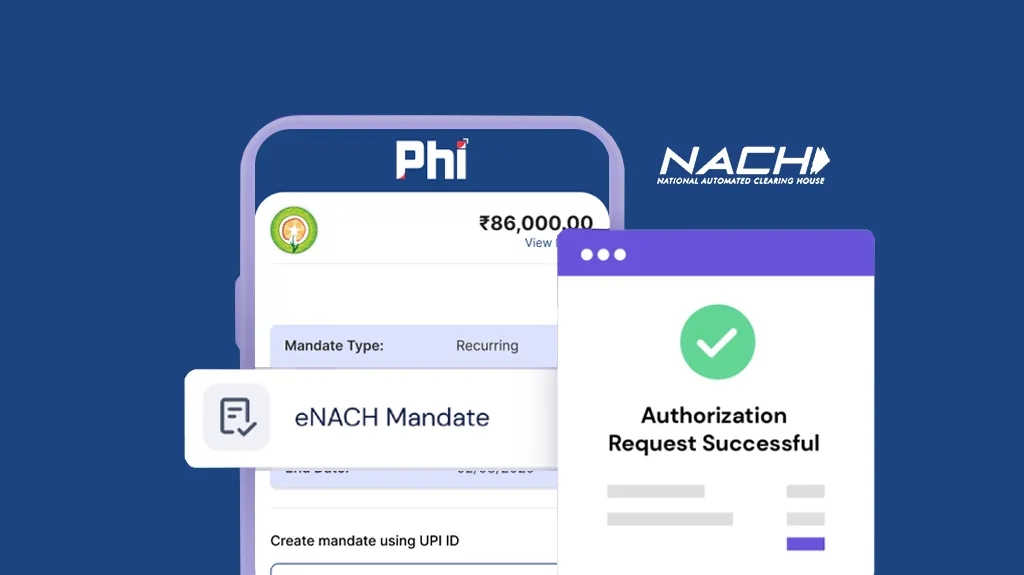
e-Mandate is a digital service by the RBI and NPCI for securely automating recurring payments like bills, subscriptions, and loan EMIs. It simplifies transactions by enabling one-time consent for automatic deductions, eliminating the need for manual payments.
What is e-Mandate?
e-Mandate, or electronic mandate, is a digital authorization system created by the Reserve Bank of India (RBI) and the National Payments Corporation of India (NPCI). It allows individuals and businesses to automate recurring payments for things like utility bills, loan EMIs, and subscriptions. Instead of manually paying bills each month, a customer provides one-time consent to their bank or payment provider, and the funds are automatically debited on the scheduled date. This system was introduced to eliminate missed due dates, reduce manual effort, and ensure secure, transparent transactions, supporting India’s goal of a cashless economy.
Why Was e-Mandate Introduced?
The key reasons for its introduction were to:
- Eliminate Missed Due Dates: It ensures payments are made on time, preventing late fees and service interruptions for customers.
- Reduce Manual Effort: It removes the need for individuals to remember due dates or manually enter payment details each time a bill is due.
- Ensure Security: By using secure, RBI- and NPCI-approved guidelines, it makes transactions safe and transparent.
- Support a Cashless Economy: It helps in moving India towards a more digital-first, paperless financial system.
How Does e-Mandate Work?
The process is simple and user-friendly:
- Registration: A customer registers with a business (e.g., a bank, an OTT platform, or an insurance company) and provides their consent for recurring payments.
- Authentication: The bank verifies this consent using methods like a debit card, net banking, UPI, or Aadhaar OTP.
- Approval: Once approved, the payment will be automatically deducted on the pre-set date.
- Notification: Customers receive alerts or SMS messages for every transaction, ensuring transparency.
The system is a one-time setup that offers auto-debit from a bank account, credit card, debit card, or UPI. It is also flexible, allowing users to set a payment frequency (daily, weekly, monthly, or yearly) and can be revoked at any time.
Key Features of e-Mandate
- One-time setup for recurring payments.
- Secure authentication using RBI and NPCI guidelines.
- Auto-debit facility from bank account, credit card, debit card, or UPI.
- Flexibility to set frequency (daily, weekly, monthly, yearly).
- Revocable anytime customers can cancel a mandate easily.
Benefits of e-Mandate
For Individuals:
- No more worrying about remembering due dates.
- Saves time and effort.
- Helps avoid late fees and penalties.
- Provides a safe and transparent payment system.
For Businesses:
- Ensures assured, timely payments.
- Improves cash flow and customer retention.
- Reduces the cost of collecting payments.
- Builds trust with customers through a reliable system.
For Banks & Financial Institutions:
- Enables smooth digital transactions.
- Leads to fewer defaults and payment delays.
- Supports the “Digital India” initiative.
Focus on the Insurance Sector
The insurance industry, which depends entirely on consistent premium collection, is one of the biggest beneficiaries of e-Mandate.
For many people, paying a policy premium is a non-negotiable, recurring expense. e-Mandate ensures that this critical payment is never forgotten, protecting policyholders from the risk of their coverage lapsing.
Benefits for Policyholders (Individuals)
- Worry-Free Coverage: Your health, life, or vehicle insurance policy remains active because payments are never missed.
- Avoids Penalties: You save on potential late fees and avoid the trouble of policy revival.
- Ease of Use: After the initial one-time setup, the process is completely hands-off.
Transaction Limits and Security
- Premium Limit: The maximum limit for a single e-Mandate transaction for insurance premium payments is ₹1,00,000.
- Security: The system is governed by the NPCI’s e-NACH (Electronic National Automated Clearing House) framework, which is fully compliant with RBI regulations.
Common Use Cases of e-Mandate
- Insurance Premiums: Life, health, and general insurance payments.
- Loan EMIs: Housing, car, and personal loan installments.
- Investments: Mutual Fund SIPs and Recurring Deposits.
- Subscriptions: OTT platforms (Netflix, Prime, Jio hotstar), magazines, and gym memberships.
- Utility Bills: Electricity, gas, water, and mobile postpaid bills.
Why Integrate with Phi Commerce?
Phi Commerce offers a robust e-Mandate solution with several advantages:
- Faster Go-Live: Uses ready-to-use APIs for quick integration.
- Security & Compliance: Adheres to strict RBI and NPCI standards.
- Scalability: Capable of handling high volumes of transactions.
- Multi-Sector Use: Applicable for insurance, NBFCs, fintechs, OTT, and more.
- Superior Experience: Provides a smooth and transparent transaction process for customers.
Conclusion
e-Mandate is a digital revolution in recurring payments, transforming a manual, time-consuming process into a secure, automated one. It provides a simple solution for individuals to avoid missed due dates and late fees on payments like insurance premiums and loan EMIs, while ensuring businesses receive timely payments and have a stable cash flow. By standardizing and securing this process, e-Mandate strengthens India’s digital payments ecosystem and supports the country’s move toward a cashless economy.
Frequently Asked Questions (FAQs) About e-Mandate
Q1. What is e-Mandate in simple terms?
e-Mandate is a digital standing instruction that lets you automate recurring payments like EMIs, bills, or subscriptions directly from your bank account, card, or UPI.
Q2. Is e-Mandate safe and secure?
Yes. e-Mandate follows strict guidelines from the Reserve Bank of India (RBI) and NPCI, ensuring strong authentication and complete transparency.
Q3. Can I cancel or modify an e-Mandate?
Absolutely. You can cancel or change an e-Mandate anytime through your bank, payment provider, or merchant platform.
Q4. What is the transaction limit for e-Mandates?
Currently, recurring transactions up to ₹15,000 can be auto-debited without extra authentication. Higher amounts require additional verification.
Q5. Who can use e-Mandate?
Any individual or business with a bank account, debit/credit card, or UPI can use e-Mandate for automated payments.
Q6. What are the benefits of e-Mandate for individuals?
It saves time, avoids late fees, and ensures payments are always on time, no more missed due dates.
Q7. How does e-Mandate help businesses?
It guarantees timely collections, improves cash flow, reduces collection costs, and enhances customer trust.
Q8. Which payments can be automated with e-Mandate?
Insurance premiums, loan EMIs, OTT subscriptions, mutual fund SIPs, and utility bills can all be automated using e-Mandates.
Q9. What if there isn’t enough balance in my bank account for an e-Mandate?
If the bank account linked to the e-Mandate has insufficient balance, the transaction will fail. The customer may be charged a penalty or bounce fee by the bank (like a cheque bounce). The service provider may also re-attempt the debit or notify the customer to clear dues.
Q10. How do e-Mandates work with e-NACH?
e-NACH is the digital framework created by NPCI and RBI to process recurring payments, while an e-Mandate is the customer’s digital consent that authorizes those payments. Simply put, e-NACH is the system, and e-Mandate is the approval that powers it.
Q11. What is the main benefit of using e-Mandate for insurance premiums?
The main benefit is guaranteed, timely payment. It ensures your policy premium is paid automatically on the due date, preventing your insurance coverage from lapsing due to a missed payment.
Q12. How do I set up an e-Mandate for my insurance policy?
You set it up digitally on the insurer’s website or portal by choosing e-Mandate/Auto-Pay, providing your bank details, and authenticating it using your Net Banking or Debit Card credentials.
Q13. How is e-Mandate different from the old paper system (ECS)?
e-Mandate is instant, paperless, and faster to activate. The older system (ECS) required physical forms and took weeks to process, whereas e-Mandate is verified digitally within days.
Q14. Do I get a notification before the payment is debited?
Yes. As per RBI rules, you must receive a pre-transaction notification (SMS or email) at least 24 hours before the actual premium debit is processed.


